

Self-Blame After Abuse: Nicole’s Story

Self-blame after abuse is one of the deepest wounds trauma leaves behind—Why do abuse survivors blame themselves? Because trauma sometimes severs the bond between the soul and the mind. The mind is left alone, cut off from its guide — like a car trapped in a dead-end alley, unable to move forward or back. And the soul, in that moment, lies as if in a coma.
“Ali, I disgust myself now. I just loved him, I loved him so much. As a child it was my stepfather; then the man I loved tried to force himself on me. I always blamed myself — my own vulnerability, the fact that I was a woman… If I hadn’t been like this, none of them would have dared. That’s why I’ve always hated myself.”
These were Nicole’s words.
I am Soline, Bride of the Shadows. My American friend Nicole lives in Dubai. She’s been staying with me in İzmir for fifteen days now. Her painful story is what these lines carry.
Her eyes were red from crying. We only ever knew her as someone who loved her wine a little too much. We didn’t know that behind that love for alcohol were wounds this deep.
Yesterday she told us about the abuse she suffered as a child, at her stepfather’s hands. Ali listened patiently. Letting it out, and the way Ali received it, seemed to help her. But it turned out there was more.
“Ali,” Nicole began, her voice trembling.
“I was only seventeen. I just loved so much. I wanted to be loved so much. I thought he loved me too. But damn it — I was wrong. His intentions were something else.”
Then she broke down, kicked over the side table. Our house was a large villa by the sea, with a garden. She walked toward the trees. Clinging to the branches, she began to sob.
Suddenly she swayed, as if about to collapse. Ali rushed to her side, carried her in his arms, and sat her back down on the sofa.
Ali smokes, but he never recommends it to anyone. Yet suddenly he offered Nicole a cigarette.
Nicole was startled.
“Cigarettes are bad for you,” Ali said. “But right now, you need the nicotine in this one. Smoke it.”
Nicole had never smoked in her life. Watching her try was almost comical. Camille, Liv, and I wrapped our arms around Nicole. Four university friends, holding on to each other.
“Thank God you’re here,” Nicole said, pulling herself together a little. Then she began again.
“He invited me to his place — the man I loved. It turned out all he wanted was sex. He knew I was a virgin, and he wanted to be the first.”
“I said no. He insisted, then turned aggressive. I had my shirt on — it got torn. When I resisted, he slapped me.”
“I raked my nails across his face. When it hurt him, he started punching me. I was left in just my bra and underwear.”
“I pushed him off me with my hands. His head hit the cabinet — it started bleeding.”
“That’s when he became even more merciless. Kicks, slaps, punches — everything. My face was covered in blood. A few of my teeth were broken.”
“There was nothing around — no vase, nothing I could use to hit him. But my hand touched something made of thick glass. A heavy glass ashtray. I hit his head with it, with everything I had. Then, just like that, I ran out into the street in what was left of my clothes.”
She lowered her head, covered her face with her hands, and began to cry. A deep silence settled over the room. But for some reason, Ali was smiling. I gestured — why are you smiling? He gestured back — don’t worry, stay calm.
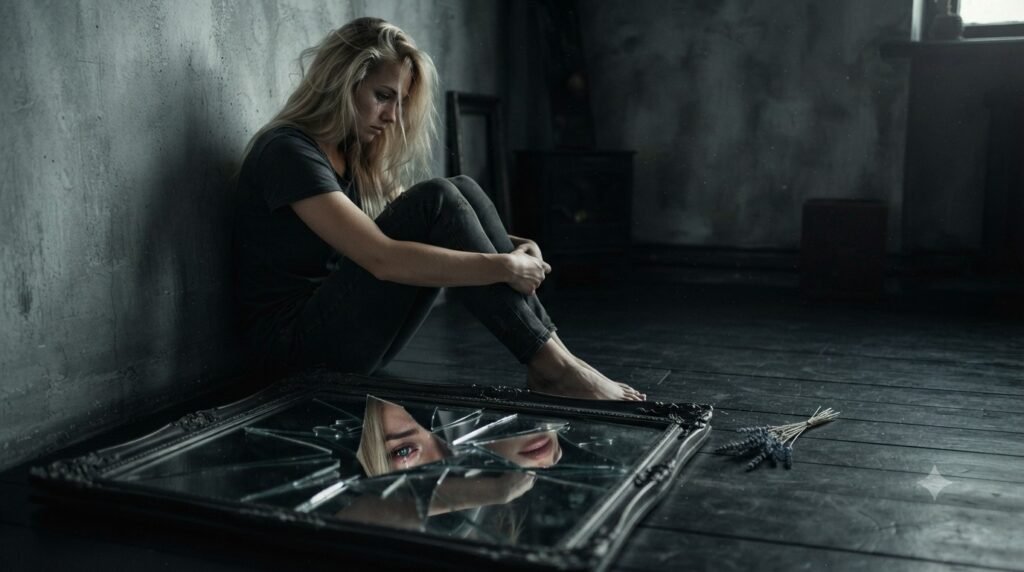
Nicole spoke again, her voice shaking.
“Why are all men like this. As a child it was my stepfather, then the man I thought loved me. It’s all my fault. Being a woman, my innocence — it provoked them.”
Why Do Survivors Struggle with Self-Blame After Abuse?
Ali spoke for the first time.
“Nicole, who told you that you’re the guilty one? Lift your head first.”
“Why would being a woman be a crime. I’m a Muslim. Let me tell you two sayings of my Prophet, Muhammad — peace be upon him:
Paradise lies beneath the feet of mothers.
Women are a trust from Allah placed in your care.
Nicole, could life exist without women? Or without men? The two are two halves of the same fruit. In short — being a woman is not a crime.”
“Now, innocence. Are all newborns guilty, then? We Muslims consider this a virtue — chastity, purity. These are things to be honored, not ashamed of.”
Nicole was quiet for a moment. Then she answered.
“But… but if I weren’t like this, they wouldn’t have been either.”
“How do you know that, Nicole? Your stepfather — that boyfriend of yours — who knows how many others they abused or assaulted. Do you know that? Look how certain I sound about the two of them. Ask yourself how I can be so certain.”
Nicole sank into deep thought. Camille, Liv, and I were watching Ali’s eyes too, wondering what he meant.
Nicole broke the silence. “I don’t know, Ali. My head isn’t clear. I can’t think.”
“My dear, sweet Nicole. Every year, babies, children, women — even men — suffer assault or abuse.”
“Are they guilty, then? Yes, they are. Guilty of trusting. Guilty of loving.”
“A baby is full of love. It seeks love. It is defenseless, unprotected. What is its crime?”
“You protected yourself. There are millions of women who have lived what you lived. Some only harassed, some raped. Are they guilty too?”
“No, Nicole. Neither you nor they are guilty.”
“The guilt belongs to the men who surrendered their souls to darkness.”
“Why did I speak so certainly? Your stepfather is a predator. A man who abuses a child is a predator — there is no other word for it. He is not a human being. What we call a human being is full of love and mercy. He surrendered himself to darkness instead.”
“As for your boyfriend — he’s nothing but a disgraceful hunter of women. A worthless creature who sees every woman as prey.”
“Why would you blame yourself for their broken character?”
Something clicked in my head. Ali had thrown out another one of his hooks.
“Ali, you said men get harassed too. How does that happen to them?” I asked.
Ali smiled.
“Didn’t Nicole harass me the other day? Wasn’t I kissed while she was drunk?”
“And don’t the rest of you shameless ones harass me every single day? Crying and hugging me. Kissing me over some excuse. Pinching my cheek. I feel so tainted.”
Then he turned to my mother. “Mother Beatrice, I’m filing a complaint against these women. They harass me constantly. I am a victim.”
“Oh my God!!!”
Nicole burst into a sudden, bright laugh. Then the rest of us joined in. Ali’s joke had brought her back to herself a little.
“As if I’d stay quiet.” Pinching Ali’s cheek: “My handsome dark-eyed man, if you want, I’ll marry you off right now. There are three more girls here who’d take you. If we’ve sullied you, we know how to fix it with a wedding too.”
Laughter filled the air. The mood turned so joyful that Nicole forgot her pain for a moment.
“Oh, Ali, oh!!! You’re too clever. You really understand the human soul!”
“Girls, I’ll find each of you a good husband soon enough. Otherwise you’ll never leave me in peace.”
Nicole was happy now, though her eyes were still full.
“Ali, can I ask you something,” Nicole said. “I know you’re Muslim. I know you can only have contact with a woman you’re married to. But — can I hug you?”
Ali paused, thought for a moment. Then he opened his arms. Nicole simply held on to him, and they stayed like that for a while.
Why Do Survivors Feel Dirty or Impure Due to Self-Blame After Abuse?
Then Nicole continued.
“After that, I gave myself to alcohol. I came home drunk every night. I was punishing myself. Then one day I decided I needed a harsher punishment. If my innocence was what brought this on me, then I needed to become unclean.”
We were all stunned by what she was telling us. What worse punishment could she possibly give herself. But Ali’s face had gone dark, his brows furrowed as he looked at Nicole. He seemed to already understand what was coming.
Feeling “dirty” or “tainted” after abuse is not a random thought — it is one of the most common marks trauma leaves behind. A person begins to see their own body, their own existence, as a source of guilt, as if their innocence, their beauty, or their capacity to love was somehow the cause of what happened to them.
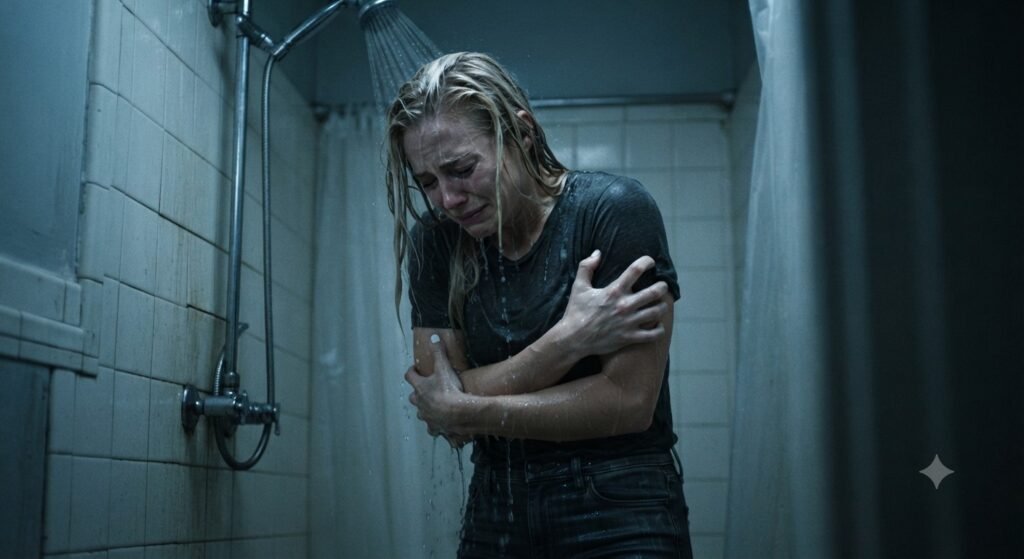
Common signs of feeling unclean after abuse
– Seeing your own body as “damaged” or “worthless”
– Consciously or unconsciously avoiding closeness and intimacy
– An overly critical, unforgiving inner voice toward yourself
– Repeatedly putting yourself in risky situations
– Failing to value yourself, believing “I’m already dirty anyway”
“One night I got very drunk again. I’d made up my mind. The punishment I’d already given myself wasn’t enough. There was a repulsive man at the bar who kept hitting on me. I walked toward him…”
Nicole hesitated, her voice trembling. Ali held his head in his hand, looking at Nicole with a mix of anger and heartbreak. We understood now what she had done.
“That night I drank until I couldn’t remember anything. I woke up in a hotel room with that man. Now I was completely dirty.”
Nicole fell silent again. We were all quiet, watching her with sadness. Ali sat with his head bowed, staring at the floor.
“I thought they’d finally leave me alone once I became dirty. But nothing changed.”
The silence was broken by the cat’s meow. As if it sensed something, it jumped into Nicole’s lap, rubbing its head against her face, touching her cheek with its paw as if to say, don’t be sad.
“How innocent these cats are,” Nicole said, her voice shaking. “All they want is to be loved.”
How Does Self-Blame Lead to Self-Destructive Behavior?
Ali seemed to have been waiting for this exact moment, and he took it.
“Just like you, Nicole. All you wanted was someone who would love you, touch your heart, hold your hand. Someone to heal your wounds. You wanted, innocently, to love and be loved — like a little sparrow with a broken wing.”
Nicole looked straight into Ali’s eyes, as if asking for forgiveness.
“Are you angry with me, Ali?”
“Yes, I’m angry. Very angry. You were a rare lavender. And some worthless man crushed you under his feet.”
“And you let it happen. By judging yourself unfairly. By punishing yourself unfairly!!!”
“A flower without equal! A rare flower! How can it belong under filthy feet, Nicole?”
Nicole couldn’t answer. The girls held her close. We comforted her in silence.
“Nicole, I’ve known you for fifteen days. I can’t judge you. But you have punished yourself unjustly.”
“No, Ali!!! Liv, Camille, and I have known you for years. We may have only seen your face fifteen days ago, but we knew you all through our university years. Soline told us about you every single day.”
“Honestly, you became a father, a brother, a lover to all of us. If I’m not mistaken, Liv and Camille feel the same. You can ask them. In short — your opinion matters to us.”
The girls answered with a short “yes,” confirming it.
Can Self-Blame Be a Way of Feeling in Control?
“Listen closely, Nicole. Some people go through a different kind of trauma process after what you experienced. In those cases, the soul itself can be wounded. The connection between soul and mind is severed.”
“The soul is the captain of the body. It holds the wheel. It tells the mind what to do.”
“But in your case, because the soul collapsed, the mind lost its way. Like a car stuck in a dead-end alley.”
“When the mind gets stuck, the first thing it blames is the body. In short, it says, ‘It’s all your fault.’ Call it gender, call it innocence — in the end, the mind needed *something* to blame.”
“Oh, Nicole, you were never guilty of anything. It’s just that your mind’s compass, with the soul out of commission, made the wrong call. You’ve done yourself an injustice.”
“There is only one guilty party here: the men who surrendered themselves to darkness.”
Who Is Ali? Following a Mystery

Soline had once shared a memory of her own with Ali — one Liv and Camille already knew.
Back in high school, a thug from outside the school had cornered her. As if by miracle, Ali suddenly appeared. He beat the thug badly. The thug told his father, and the next day the father showed up outside the school gates. Ali had also come, as a precaution, to pick Soline up.
When the thug’s father tried to attack Soline because his son had been beaten, Ali beat the father too. It turned out the man recognized Ali — he apologized to Soline, then beat his own son in front of everyone.
“Ali, I’ve been wondering — who are you? Whenever Soline is in trouble, how do you always know, how do you always show up in time? How do you understand all of our inner worlds so well?” Nicole asked.
Ali and my mother, Beatrice, exchanged a look. A meaningful one. They’re hiding something from me — but what?
“There’s no mystery. I’m just an ordinary man moving through life. Nothing special about me. This world is just an inn to me, and I’m only a traveler passing through. In short — I’m a lone wolf.”
Then he added:
“Nicole, you can’t erase the past, the trauma you lived through. But you can heal your soul. Stop punishing yourself now. Strengthen your soul too. Don’t let anything break you again.”
“Strengthen my soul… how is that even possible, Ali? Is there a way?”
“Of course there is. Without even realizing it, you’ll learn it from me.”
“Ali, please, don’t ever leave any of us. Always hold our hands,” Nicole added.
“Just her?” All of us said it together, like a chorus.
“Girls, let me tell you two secrets. First: I’ll be by your side until you marry. But after that, you won’t be able to find a trace of me. When the time comes, you’ll build your own homes, and you’ll be happy. I’ll only exist in your memories.”
Chaos broke out at those words. All of us objected, in our own voices, refusing to accept it.
“Girls, that’s the truth of life. When you’re ready, the man meant for you will appear. Believe me, you’ll be very happy. But first, some things in you need to grow.”
“As for me — once you’re married, my presence would become a problem in your marriage. Your husbands would fall into fits of jealousy. So that’s the final point, the end of the road.”
“And whoever wants to marry Soline will have to come and ask my permission first. I’ll be the one to give her away.”
Everyone’s faces fell, sad.
Four Women, One Shared Wound
“Girls, let’s return to the matter at hand. Nicole, you went through a trauma, and you blamed yourself unjustly for it. All of you share something in common. Maybe that’s exactly why fate brought the four of you together, why you became friends.”
We looked at each other’s faces. What could our common thread possibly be?
“All four of you were betrayed by men you loved. In truth, you didn’t love them. You were only searching for love. To love, to be loved. An innocent expectation.”
“Nicole, you grew up without a mother’s or father’s love. You’ve always been open to love, always searching for it.”
“Camille, you grew up under a stepmother’s hand. You searched for your mother. Your father was cruel. You stayed open to love, searching for it.”
“Soline, you’ve kept an old photograph, always searching for a childhood love — isn’t that right?” Ali asked.
I was shocked. How could Ali possibly know this — especially since my mother had torn the face out of that old photograph years ago.
Stammering, I asked, “Ali, how do you know this?”
“Does it matter how I know? He was your innocent childhood love. After your father’s early death, didn’t you always cling to that one moment of childhood love? You wanted to love and be loved, for years.”
“And Liv — what about you? Life in an orphanage wasn’t easy, was it? Didn’t you cry silently whenever you saw children walking with their parents on the street? Didn’t you long for a mother to brush your hair, a father to kiss your face?”
“At night, in the dormitory, wasn’t your pillow soaked with tears more than once?”
“Growing up starved of love — didn’t that make you fall into that trap? All you ever wanted was to love and be loved. But you chose the wrong man. Then came betrayal. You only ever wanted innocent love, Liv.”
We were all looking at Liv now. We’d been friends for years, yet none of us had ever seen each other’s wounds. Ali had seen through all of us in no time.
“Liv, did you grow up in an orphanage? You never told us,” I said.
Liv was shaken, trembling.
“Ali, how do you know I grew up in an orphanage with no one? There’s no way you could know that!!!”
Why do survivors struggle with self-blame after abuse?
Survivors often experience self-blame after abuse as a way of coping with the helplessness and loss of control that trauma leaves behind. The mind’s need to find an explanation or a reason ends up directing this self-blame after abuse at the nearest available target, the survivor‘s own body and existence. Recognizing that this guilt is a symptom of trauma, not a reflection of truth, is the first step toward healing.
Is self-blame after abuse a normal reaction?
Yes, self-blame after abuse is an extremely common and “normal” psychological reaction to trauma. It doesn’t stem from weakness, but from the human mind’s desperate need to find meaning, and a false sense of control, in the face of overwhelming helplessness. Understanding that self-blame after abuse is a survival mechanism, rather than a reflection of reality, is a crucial part of the recovery journey.
How do I stop the cycle of self-blame after abuse?
Letting go of self-blame after abuse starts with clearly seeing where the guilt actually belongs, on the perpetrator, never the victim. As in Nicole’s story, strengthening the soul and naming the trauma for what it is are the first steps toward breaking the cycle of self-blame after abuse. Healing involves replacing this false guilt with self-compassion and understanding that you were never responsible for what happened.
Why do children blame themselves for abuse?
Children often take on responsibility for abuse because they cannot make sense of the confusion it creates — this is a way of searching for meaning and control in a situation where they had none, and has nothing to do with actual guilt.
Why do abusers make victims feel responsible?
Abusers blur boundaries by shifting the responsibility for their own actions onto the victim, in order to hide their own guilt. This is a conscious or unconscious form of manipulation that makes it easier for the victim to blame herself.
Why do I feel like I deserved this?
This feeling doesn’t come from any real wrongdoing — it comes from the mind’s attempt to make sense of chaos. As Nicole believed for years, the feeling of “deserving it” is often the internalized version of a false responsibility the abuser placed on the victim.
Why can’t I stop blaming myself after trauma?
Self-blame tends to persist like a habit until the bond between soul and mind is repaired. As Ali tells Nicole, recognizing that break and rebuilding the soul’s strength takes time — but it isn’t impossible.
✉️ Join Our Dream Newsletter
Every week, we share authentic dream interpretations, spiritual insights, and real stories that awaken awareness.
Subscribe now to receive guidance directly in your inbox — and never miss the deeper meaning behind your dreams.
🌙 VIP Personal Guidance Invitation
Sometimes a dream is more than a symbol. Sometimes it is a cry for help, or a hidden truth waiting to be heard.
With our VIP Telegram service, you can receive:
- Personal dream interpretation
- Spiritual counseling and listening support
- Direct one‑on‑one guidance, available 24/7